Rain jackets tend to fall into two camps: heavy, bombproof shells you dread carrying—or ultralight options that pack small but leave you questioning their limits the first time the weather turns nasty. When I packed the Outdoor Vitals Tushar Rain Jacket for a 7-day trek to the summit of Mount Kilimanjaro, I was genuinely curious which category it would land —but I’ll let you in on the secret in this Tushar rain jacket review.
Seven days, wildly changing elevations, and multiple days of steady rain later, I can confidently say the Tushar Rain Jacket strikes an impressive balance between ultralight packability and real-world storm protection.
Key Takeaways
Exceptional Versatility and Layering: The jacket’s “standard” fit allows it to layer comfortably over everything from sun hoodies to bulky down jackets without restricted movement, making it effective across a wide range of temperatures and elevations.
Advanced Hybrid Waterproofing: Utilizing body-mapped Toray Torain technology, the jacket combines hydrophobic membranes in high-wear areas (shoulders/back) with breathable hydrophilic membranes elsewhere to provide reliable storm protection without the “clammy” feel typical of ultralight shells.
Minimalist Weight with High Performance: Weighing only 7.4 ounces and packing down to the size of a small football, the jacket offers a high protection-to-weight ratio, featuring essential venting and fast-drying fabric suitable for demanding multi-day treks like Mount Kilimanjaro.
Article Overview
Outdoor Vitals Tushar Rain Jacket Review Specs
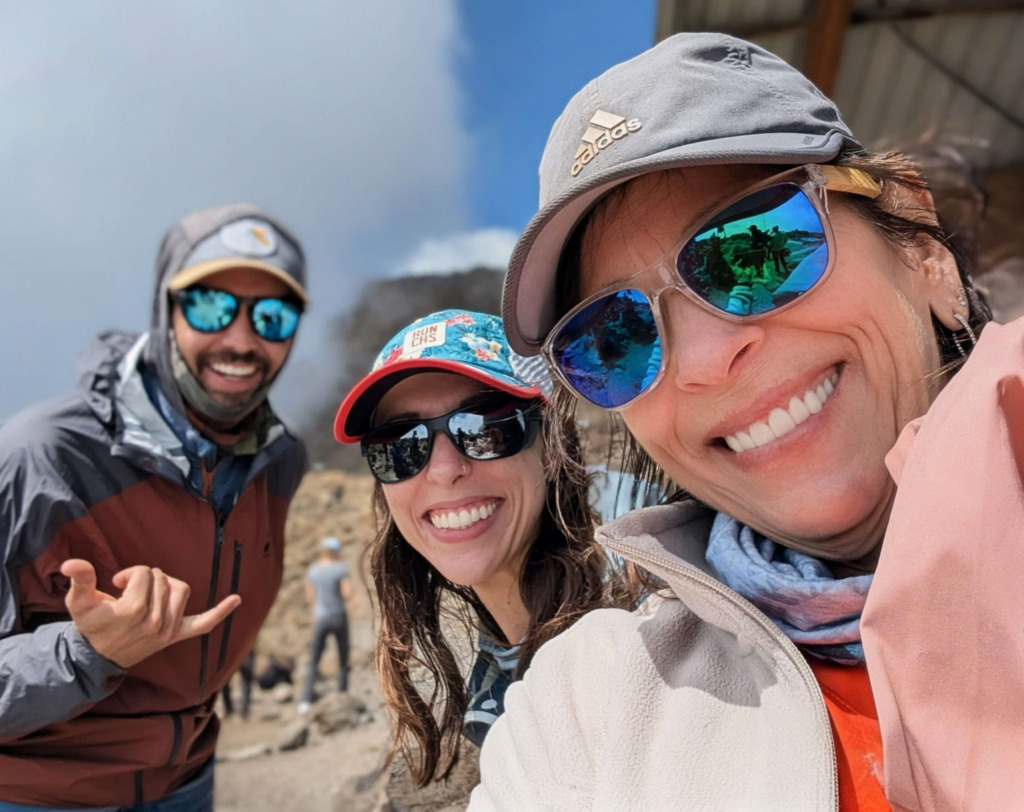
Before diving into this Tusha, here’s a quick look at what the Tushar ultralight waterproof rain shell brings to the table:
Weight: 7.4 ounces (size Large)
Packability: Packs down extremely small—ideal for minimalist setups
Waterproofing: Toray Torain Technology with a durable water-repellent (DWR) finish
Fit: Standard outer layer, but layer-friendly
Intended Use: Ultralight backpacking, hiking, trail running, and fast-and-light adventures
Because it’s maybe lesser-known, the technology used to keep these jackets water-resistant is worth diving into here. While most rain jacket have three layers, the Tushar only boasts 2.5 layers: a 20-denier face fabric, hydrophobic and hydrophilic outer membranes, and an interior half layer.
Let’s work from inside out. That 3D-printed interior half layer helps reduce the overall weight of this rain shell. It also keeps the outer membrane off your skin, reducing that “clammy” feeling you sometimes get with other rain jackets after a few minutes of steady rain.
The two different membranes are body-mapped and built into the areas you need them most. Hydrophobic membranes are used in the gray areas that often see the most wear, such as your shoulders and back—places that consistently rub against a pack. Hydrophilic membranes are used in the colored areas that receive less stress.
Hydrophobic = Excellent waterproofing with better resistance to moisture decomposition.
Hydrophilic = Excellent waterproofing with better breathability and comfort.
On paper, it checks the boxes ultralight hikers care about most. The real question, of course, is how it performs when conditions stop being theoretical.
Real-World Tushar Rain Jacket Review: 7 Days on Kilimanjaro

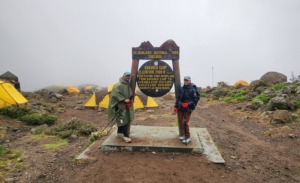
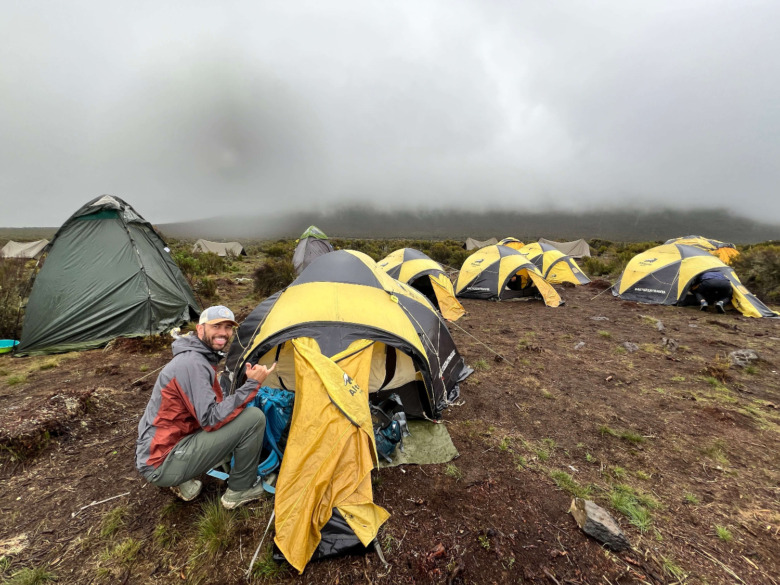
The first three days of our Kilimanjaro ascent were consistently wet, with on-and-off rain that tested gear early and often. This wasn’t a “just in case” rain jacket situation—the Tushar was in daily rotation.
Even at the rainiest moments, when a poncho was also required, the pit vents in the Tushar kept me from overheating. This was a major plus compared to many of my hiking companions who were getting way too hot under their ponchos.
At lower elevations when temperatures were mild, I wore the jacket comfortably over my Outdoor Vitals lightweight sun hoodie. Even while moving uphill with a pack, it never felt clammy or restrictive, and the lightweight fabric moved naturally rather than feeling stiff or crinkly.
As we gained elevation and temperatures dropped, layering became essential. Before it got extremely cold, the Tushar fit cleanly over an Outdoor Vitals merino wool hoodie and a fleece midlayer.
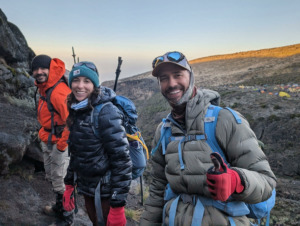
Later, in the coldest conditions near the upper camps, it still layered smoothly over all of the above, plus the Outdoor Vitals NovaPro and/or Vantage Alpine Down Jacket. No binding at the shoulders, no tightness through the chest—just enough room to trap warmth without feeling oversized.
Weather Protection and Waterproof Performance
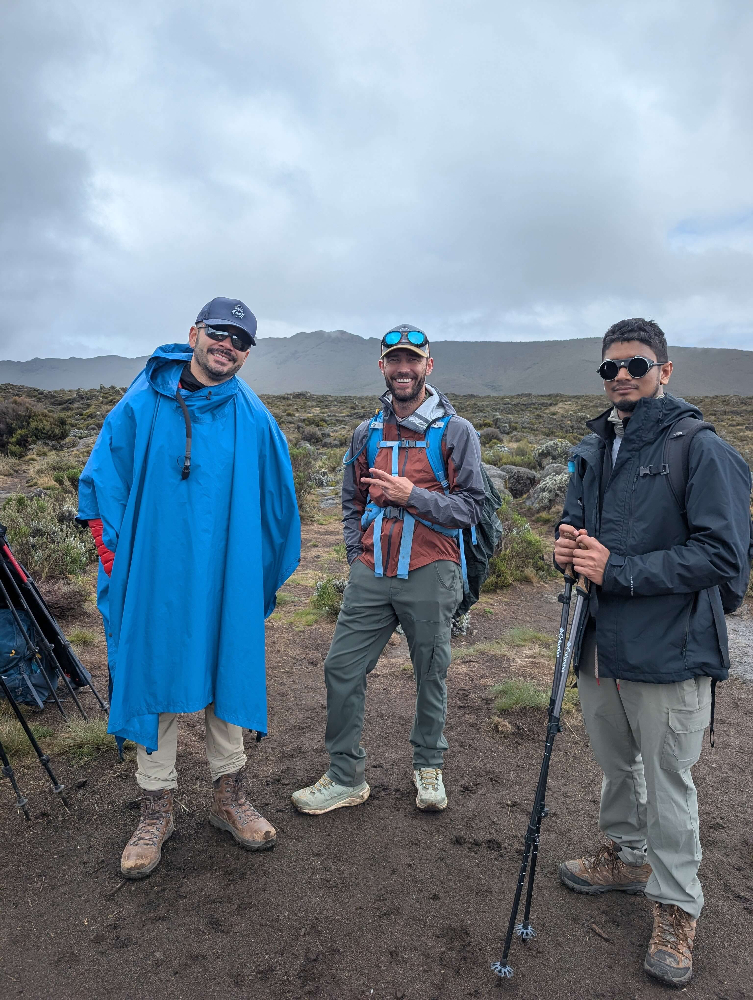
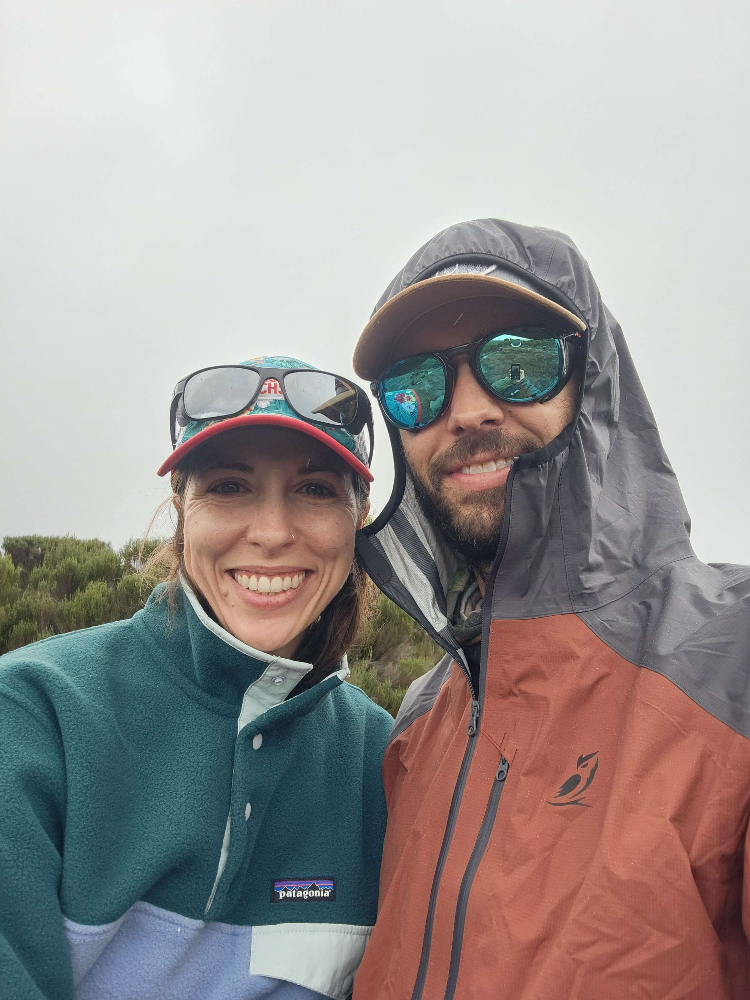
Images by Tucker Ballister
This is where I was really impressed in my Tushar rain jacket review. Rain beaded instantly on the surface and rolled right off. Even during steady rainfall, the jacket never came close to wetting through, and my base and insulation layers stayed completely dry underneath.
Once the rain stopped, the jacket dried remarkably fast. A short break or a bit of airflow was all it needed before it was ready to be packed away again. For a jacket this light, the level of protection felt far more substantial than expected.
Comfort, Weight, and Packability for Ultralight Hiking
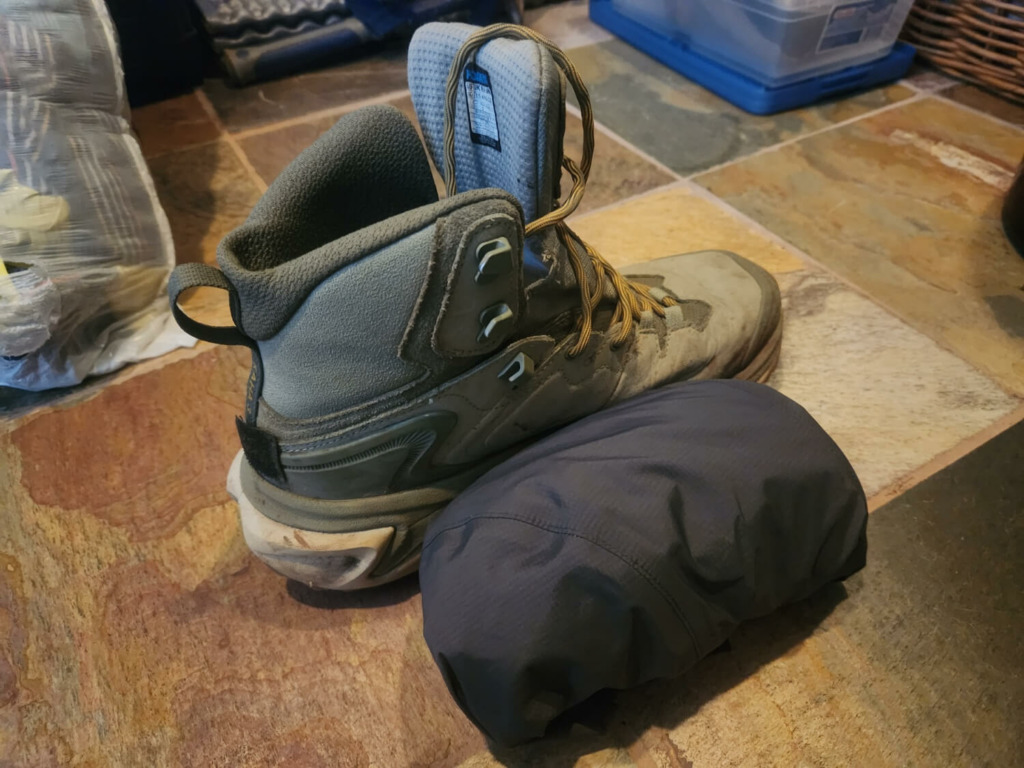
One of my favorite things about the Tushar Rain Jacket is how compact it packs down. When folded into itself and rolled up into the hood, it’s hardly the size of a small Nerf football, easily disappearing into my pack and adding almost no noticeable weight.
That’s exactly what you want from an ultralight shell: protection when you need it, and zero penalty when you don’t.
Because it’s so light and flexible, it also feels well-suited to trail running or fast-paced hiking when the weather turns ugly. It blocks wind effectively, sheds rain with ease, and doesn’t feel like overkill for short outings.
Durability and Reliability on Multi-Day Backpacking Trips

Ultralight gear always raises durability questions, but after a week of rough weather, daily wear, and repeated packing and unpacking, the Tushar showed no signs of failure. Seams held, the fabric maintained its water-shedding ability, and nothing felt fragile or compromised.
Keep in mind, this comes after several weeks of testing it in winter rain in North Carolina before our Africa trip. It’s clearly designed for people who actually use their gear—not just admire it at home.
Is the Outdoor Vitals Tushar Rain Jacket Worth It for Ultralight Hikers?
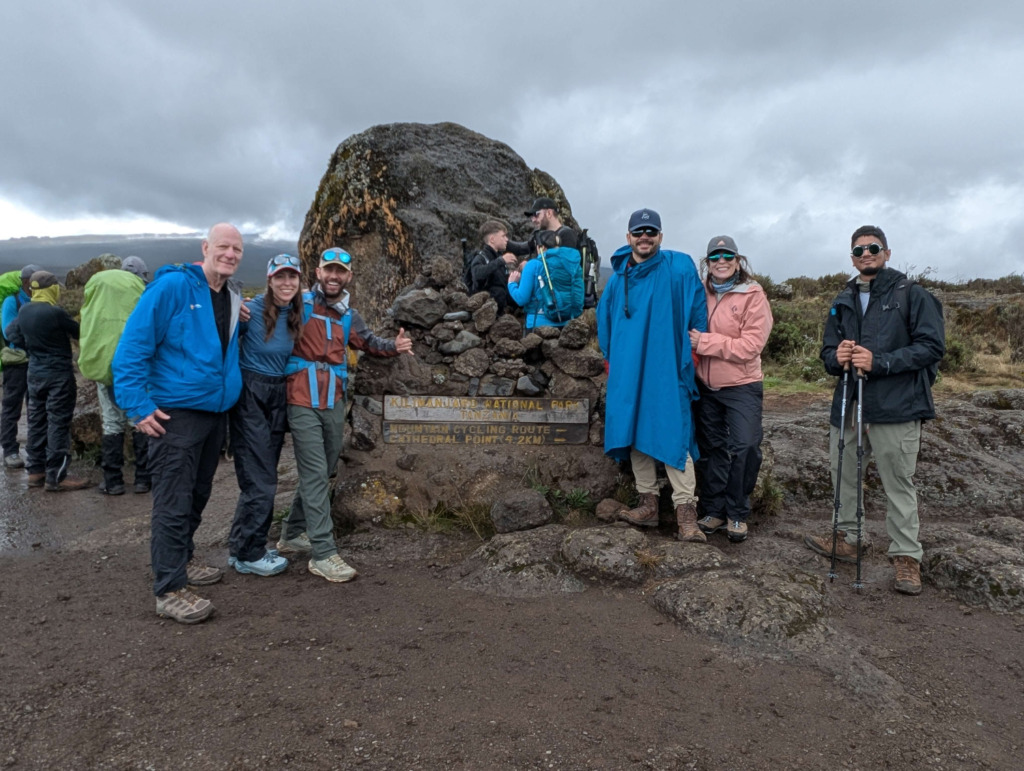
After conducting my Tushar rain jacket review on daily walks at home and in real mountain conditions—rain, cold, altitude, and long days on trail—I’d absolutely recommend the Tushar rain jacket. In my mind, it’s exactly what ultralight hikers want:
Excellent waterproof protection for its weight
Outstanding packability
Reliable layering performance across a wide temperature range
Fast drying and dependable weather resistance
Whether you’re counting ounces on multi-day backpacking trips, pushing miles on fast hikes, or looking for a rain shell that won’t slow you down when storms roll in, the Tushar is a standout option.
It earned its place in my pack on this Kilimanjaro trek—and that’s about the highest praise I can give a rain jacket.
What questions do you have about this Tushar rain jacket review? Let me know in the comments below!